The journey of transforming a vacant commercial brick-and-mortar space into a bustling, aromatic, and profitable restaurant is one of the most exhilarating ventures an entrepreneur can undertake. The sight of an empty room holds limitless potential—the future location of a lively bar, a serene dining oasis, or a high-output open kitchen. However, between that initial vision and the celebratory clink of glasses on grand opening night lies a complex, multi-layered gauntlet of commercial construction, municipal regulations, and engineering puzzles.
Pre-Construction, Zoning, and Legal Foundations

Before a single sledgehammer swings or a single coat of paint is applied, the success of your restaurant is determined on paper. The pre-construction phase is where you validate whether your dream is physically and legally permissible within the walls of your chosen leasehold. Failing to perform deep due diligence during this stage can result in catastrophic financial losses, such as signing a five-year lease on a space that cannot legally support a commercial kitchen exhaust system.
Decoding Local Zoning Laws and Commercial Feasibility
Your first task is to ensure the municipality recognizes your space as a viable location for public assembly and food preparation. Do not take a landlord’s word that a space is “restaurant-ready.” You must independently verify the zoning classification with your local planning department.
-
Verify the Occupancy Use-Case: Commercial spaces are categorized by specific occupancy types. A retail clothing store operates under a different classification than a restaurant. Shifting a space from retail to assembly requires a change-of-occupancy permit, which triggers strict modern building codes, including mandatory upgrades to fire suppression and accessibility.
-
Assess Structural and Utility Thresholds: A standard retail space might run on a modest electrical panel and a residential-sized water line. A restaurant requires immense utility capabilities. You must verify that the building can physically accommodate heavy-duty grease traps, massive rooftop HVAC units, and high-amperage electrical panels.
-
Evaluate Parking and Structural Footprints: Many cities enforce strict ratios regarding the number of dedicated parking spaces required per dining room seat. If your building lacks adequate parking or an agreement for shared parking, you may be forced to reduce your guest capacity before you even begin layout planning.
Securing the Legal Green Light Before Breaking Ground
Once you confirm the space is viable, you enter the administrative pipeline. You cannot legally alter a commercial structure without explicit permission from various local governing bodies. This process requires hiring an architect or a commercial expeditor to submit highly detailed blueprints to your local building department.
The submission packet typically includes architectural floor plans, electrical schematics, mechanical engineering layouts, and plumbing diagrams. Review boards will scrutinize these documents to ensure they meet local building permits, life-safety codes, and Americans with Disabilities Act (ADA) compliance guidelines. This review process is rarely a one-and-done affair; expect the city to return your plans with requests for revisions. Budgeting a realistic time buffer of three to six months for plan reviews is essential. Attempting to bypass building permits by conducting unpermitted work will result in immediate stop-work orders, steep fines, and the potential requirement to tear down completed work to expose covered structural elements for retroactive inspection.
Site Preparation and Structural Shell Modifications
With your approved plans and permits in hand, you can finally transition from administrative preparation to physical labor. This phase focuses on preparing the structural shell of the building, stripping away the remnants of past tenants, and modifying the core architecture to support the heavy, specialized demands of a restaurant environment.
Tearing Down the Old to Make Room for the New
Rarely does an empty space perfectly match the flow required for a modern hospitality business. Whether you are taking over a former boutique or retrofitting an older diner, you must clear out the old infrastructure safely and systematically.
-
Isolate Utilities Before Tearing Down Walls: Before any demolition begins, all electrical circuits must be verified as dead, water mains must be shut down, and gas lines capped. This prevents accidental electrocution, flooding, or gas leaks during the chaotic early days of a teardown.
-
Preserve Load-Bearing Integrity: You cannot simply knock down walls to create an open-concept dining room without understanding the building’s structural engineering. A certified professional must evaluate which walls are partition walls and which are load-bearing pillars holding up the roof.
-
Manage Hazardous Material Disposal: Older commercial buildings frequently harbor hidden dangers behind their drywall, including asbestos insulation or lead-based paint. Hiring a certified commercial demolition contractor ensures that these hazardous materials are identified, contained, and disposed of according to environmental protection regulations, preventing toxic contamination of your future dining space.
Fortifying the Exterior Envelope
A major element of restaurant infrastructure involves placing heavy mechanical equipment on the roof of the building, such as makeup air fans and massive exhaust hoods designed to pull smoke and grease out of the kitchen. Because these units weigh thousands of pounds, you must engage professional roof contractors to assess the structural load-bearing capacity of your roof deck. These specialists will install structural steel supports, cut precise penetrations through the roof for ductwork, and apply commercial-grade flashing and waterproofing membranes. If the roof installation is botched, rainwater will seep down the exhaust ducts, ruining expensive kitchen equipment and creating breeding grounds for mold within your walls.
Rough-In Utilities and Mechanical Systems

Once the site is cleared and structurally sound, the “rough-in” phase begins. This is the stage where the internal nervous system and circulatory system of your restaurant are installed inside the open walls and under the floors. This work must be completed with absolute precision before any drywall is hung or finished flooring is laid down.
Powering Up High-Voltage Kitchen Equipment
The electrical consumption of a commercial kitchen is staggering. Unlike a standard home, which operates on single-phase electricity, a restaurant requires robust three-phase electrical systems to power walk-in freezers, high-speed dishwashers, combi-ovens, and extensive cooking lines simultaneously.
-
Establish Dedicated Circuits for Critical Infrastructure: Refrigeration units must never share a circuit with other appliances. If a toaster trips a shared breaker overnight, a walk-in freezer full of expensive protein can spoil, costing thousands of dollars in lost inventory.
-
Plan for Water-Resistant Safety Upgrades: Kitchens are inherently wet environments. Code mandates that all outlets within a specific radius of water sources utilize Ground Fault Circuit Interrupter (GFCI) technology to prevent shock hazards.
-
Coordinate Exact Placement for Smooth Workflows: You must work closely with experienced electrical contractors during the rough-in stage to position outlets exactly where your future equipment will sit. Moving an electrical drop even twelve inches to the left after the drywall is finished is an expensive mistake that requires tearing open the walls again.
Climate Control and Air Quality Management
The heart of your restaurant’s air comfort relies on a comprehensive commercial HVAC installation designed specifically for food service operations. This system consists of dedicated rooftop units that handle guest comfort, paired with dedicated exhaust hoods that pull grease-laden air out of the building. Crucially, the system must incorporate a “makeup air” unit. For every cubic foot of air your kitchen hood sucks out, an equal amount of conditioned outside air must be pumped back into the building. If your HVAC installation lacks proper makeup air balance, the restaurant will develop negative air pressure. This causes doors to be difficult to open, pulls sewer odors up through floor drains, and allows kitchen smoke to pour directly into the guest dining room, ruining the hospitality experience.
Commercial Plumbing and Back-of-House Infrastructure
Water is both the lifeblood and one of the greatest potential liabilities of a restaurant operation. From ice machines and soda fountains to dishwashers and hand sinks, water flows through every square foot of a food service business. The plumbing infrastructure must be built to withstand heavy volume, intense heat, and corrosive chemical cleaners without failing.
Establishing Reliable Water Supply Lines
Commercial kitchens operate multiple water zones simultaneously, each requiring different temperatures, pressures, and flow rates. A mistake in sizing your pipe diameters can result in a line cook losing water pressure at their prep sink whenever the automated dish machine fills up.
-
Execute Multi-Zone Temperature Management: Your plumbing system must feed high-temperature sanitizing dishwashers that require water heated to at least 180 degrees Fahrenheit, while simultaneously delivering safe, tempered water to employee handwashing stations.
-
Install Mandatory Backflow Prevention Devices: To protect the public water supply, local codes require specialized backflow preventers at every cross-connection point. This ensures that dirty dishwater or chemical-laced soda syrup cannot siphon back into the city’s clean drinking water lines.
-
Partner with Specialized Commercial Technicians: Because of the complexity of commercial beverage lines, remote beer lines, and industrial water heaters, you must employ a certified local plumbing service experienced in hospitality infrastructure. They will ensure that copper lines are properly insulated, water pressure regulators are installed, and all pipe runs comply with local health department mandates.
Mitigating Grease and Waste Challenges
What goes down your drains is just as important as what comes out of your faucets. Restaurants generate massive quantities of wastewater filled with fats, oils, and grease, commonly referred to as FOG. If this grease solidifies inside your pipes or enters the municipal sewer system, it creates blockages that lead to raw sewage backups and catastrophic business closures.
To prevent this, you must install an industrial grease interceptor, commonly known as a grease trap. This device slows down the flow of warm, greasy water, allowing the grease to cool, separate, and float to the top while clear water drains out the bottom. Additionally, because commercial kitchens require frequent floor washing, your plumber will install a network of heavy-duty floor sinks and troughs. Despite best practices, food debris and residual fats will inevitably sneak into the drainage lines during the chaotic construction phase and early weeks of operation. Establishing a preventative maintenance contract with local drain cleaning companies ensures that your lines are hydro-jetted and cleared of construction plaster, silt, and organic buildup before you open your doors to the public, preventing embarrassing plumbing emergencies on a busy Friday night.
Interior Layout, Flow, and Guest Comfort
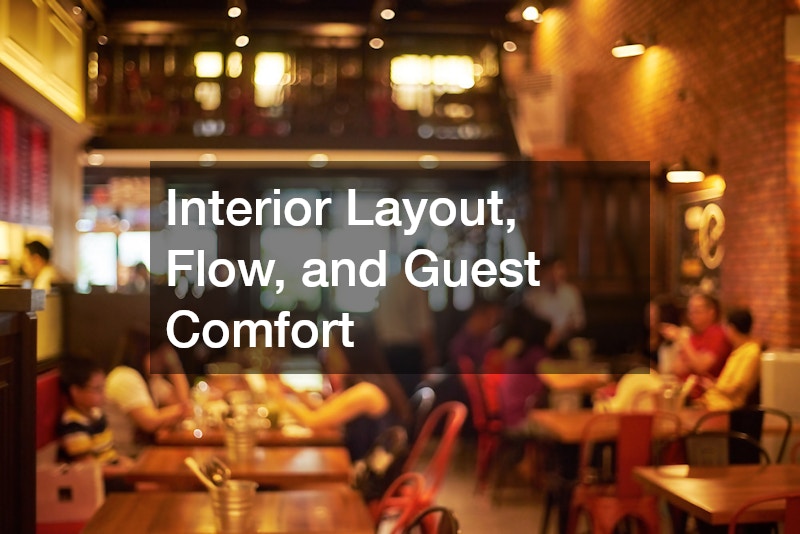
Once the hidden utilities are approved by municipal inspectors, the walls can be closed, painted, and tiled. This transitions the project into the design and spatial arrangement phase, where the physical layout directly influences employee efficiency, safety, and the psychological comfort of your guests.
Optimizing Culinary Workflows for Speed and Safety
The back-of-house layout should never be designed purely based on visual aesthetics; it must be engineered around the movement of food, staff, and waste. A poorly organized kitchen leads to chaotic service, dropped plates, cross-contamination, and increased workplace injuries. The cornerstone of an efficient back-of-house is a scientifically grounded kitchen design that establishes a clear, linear flow of operations.
Curating the Guest Atmosphere and Spatial Dynamics
While the kitchen is built for industrial utility, the front-of-house must be engineered for hospitality, mood, and brand identity. However, your dining room layout must still respect spatial limits and accessibility laws.
-
Balance Maximized Capacity with Guest Privacy: While it is tempting to cram as many tables into your dining room as possible to maximize potential revenue, overcrowding creates a stressful dining experience. Guests need physical breathing room, and servers require clear, unobstructed pathways to carry heavy trays safely.
-
Strictly Enforce Accessibility Standards: Federal and local laws dictate clear guidelines for restaurant seating. Pathways must be wide enough to accommodate wheelchairs, a specific percentage of your tables must be accessible, and service counters must include lower sections for guests with mobility challenges.
-
Invest in Outrageously Durable Furnishings: Residential furniture will disintegrate within months under the abuse of a commercial restaurant environment. When sourcing your commercial furniture, including booths, tables, chairs, and barstools, look for heavy-duty construction such as reinforced double-dowel joints, commercial steel frames, and stain-resistant, marine-grade upholstery fabrics that can handle thousands of guests, spills, and heavy sanitizing chemicals without tearing or wobbling.
Final Touches, Soft Launch, and Operations

With the construction complete and the furniture staged, you enter the final pre-opening phase. This is the bridge between construction and daily operations, where you shift your focus from major infrastructure to the fine-tuning of tools, staff training, and rigorous quality control.
Precision Tooling and Culinary Readiness
A kitchen full of million-dollar equipment is useless without the precise hand tools required for culinary execution. Before your back-of-house team can begin prepping ingredients for opening week, every piece of kitchen smallwares must be unboxed, washed, organized, and calibrated.
A critical, often overlooked detail in kitchen readiness is the maintenance of the line cooks’ primary tools: their knives. Dull knives are slow, crush delicate ingredients instead of slicing them, and are highly dangerous because they are prone to slipping off slick vegetable skins and cutting the user. As part of your final operational setup, you must establish a contract with a professional knife-sharpening service. These specialists will visit your restaurant on a recurring weekly or bi-weekly schedule to swap out dull blades for factory-sharp, perfectly honed knives. This ensures your culinary team can work with maximum speed, precision, and safety from the very first day of prep, reducing product waste and keeping your staff out of the emergency room.
Passing Final Inspections and Hosting a Soft Launch
The absolute final hurdle of your restaurant build-out is passing the comprehensive inspection gauntlet required to secure your Certificate of Occupancy. You cannot legally serve food or alcohol to a paying customer until multiple municipal departments sign off on your completed space.
This process involves coordinating a series of final on-site walk-throughs. The health inspector will check water temperatures, refrigeration seals, and surface cleanliness; the fire marshal will test fire alarms, emergency exit signs, hood suppression systems, and extinguisher placements; and the building inspector will verify that the final construction perfectly matches the originally permitted architectural plans.
Building a restaurant from an empty space is a monumental achievement that demands a unique blend of creative vision, financial resilience, and strict organizational discipline. It is a process where abstract design ideas must ultimately conform to the rigid laws of physics, mechanical engineering, and municipal safety codes. By approaching the project systematically—securing the proper permits, managing structural changes safely, investing in robust utility infrastructure, and working with licensed commercial professionals—you transform a chaotic construction site into a finely tuned business machine.